Sewer Line Replacement in Woodstock, GA
When a line is collapsed, badly bellied, or failed along its run, repair stops being honest. Replacement renews the whole run, and the camera decides the method.
Request Service
Tell us what is happening and we will call you back to confirm a visit.
For sewer line replacement Woodstock homeowners can trust, we find the failed section with a camera, explain the repair options in plain terms, and replace the pipe with a lasting fix. We serve Woodstock in Cherokee County, and we aim to get a technician to you the same day you call.
The camera decides, not the sales pitch
At a glance
- Camera inspection first, so the failed section is located and shown to you
- Trenchless and open trench options explained for your specific pipe
- Roots, bellies, offsets, cracks, and collapses diagnosed on footage
- Upfront pricing before work starts, with access and restoration explained
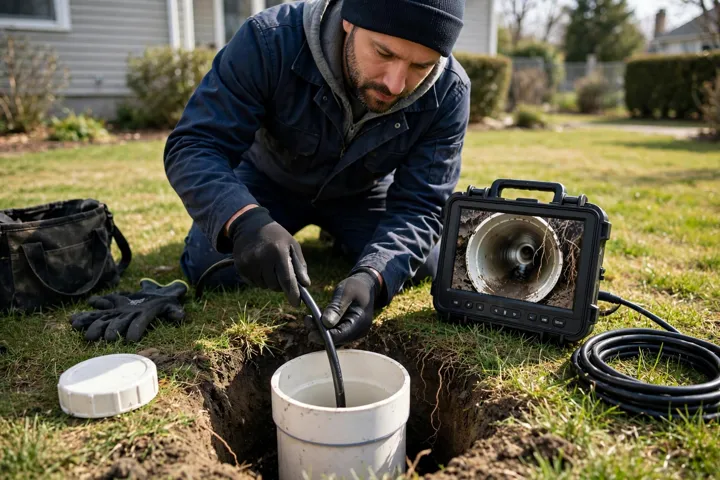
Every sewer line replacement Woodstock job we take starts the same way: with a camera run that shows the pipe from the inside. A sewer line fails in specific ways, and each way points to a different fix. Roots enter through joints and grow into a mat that blocks flow. A belly is a low section where water and solids sit instead of flowing away, and it will keep collecting material no matter how often the line is cleaned. An offset joint is a step in the pipe where one section has shifted relative to the next, catching paper and solids. A crack or a collapsed section is a structural failure, and no cleaning will restore it.
We show you the footage and explain what you are looking at. That matters because a sewer replacement is a significant job, and you should never have to take our word for it alone. The camera also shows where the problem sits: how far from the house, how deep, and how long the failed section runs. Those three facts drive the method, the access plan, and the price. A short failed section near the surface is a different job from a long failed run under a driveway, and any honest quote reflects that difference.
The material of the existing line also shapes the method. Clay tile sections tend to fail at joints where roots enter. Cast iron can scale and corrode from the inside until flow narrows. PVC usually fails at a joint or a badly bedded section rather than along its length. The camera shows the material as well as the failure, and the method we recommend follows both: what the pipe is made of decides what repair it will honestly hold.
The camera also shows whether the problem is on your side of the system or beyond it. The camera shows it and the crew confirms on site: we trace where the line runs, where the failure sits, and what portion is yours to fix, before any digging or lining starts. If the problem turns out to be beyond your line, we will tell you that too, because replacing pipe that is not yours is not a fix.
Trenchless methods, explained without the hype
Trenchless repair is a real advance, but it is not magic, and it is not right for every pipe. The two main trenchless approaches work differently. Pipe lining inserts a liner inside the existing pipe and cures it into a new pipe within the old one. Pipe bursting pulls a new pipe through the old line, breaking the old pipe outward as it goes. Both avoid a full open trench along the whole run, which is why they appeal to homeowners with driveways, patios, or mature landscaping over the line.
Lining works best when the existing pipe still holds its shape. A pipe with roots or scale can often be cleaned and lined successfully. A pipe that has collapsed, or a pipe with a severe belly, may not be a lining candidate, because a liner follows the shape of the old pipe: it will not correct a low section that holds water. Bursting can replace a pipe that lining cannot save, but it needs entry and exit points and a clear path, and it is not suitable where other utilities crowd the line or where the pipe runs too close to structures that cannot tolerate ground movement.
We explain which method fits your pipe, and why, using your camera footage as the evidence, and that explanation is standard on every sewer line replacement Woodstock job we take. If neither trenchless method fits, we will say so and explain the open trench option honestly, including what it means for the yard and how restoration is handled. If a trenchless method does fit, we explain its limits too: a lined or burst section is only as good as the preparation, the cleaning before it, and the inspection after it. We camera the finished work as well, because a replacement you cannot see verified is not a verified replacement.
Georgia ground shapes these decisions. Red clay soil shifts with wet and dry seasons, and that movement is often what turned a sound joint into an offset or a crack in the first place. Tree roots from oaks and pines are relentless once they find a joint, and they will find a new joint if the repair leaves weak points nearby. That is why we look at the whole line, not just the worst section, and why we talk about the sections that are still sound and what to watch for in them.
Open trench: when digging is the honest answer
An open trench is not a failure of modern methods. It is the right answer when the pipe has collapsed, when the line needs regrading to fix a belly, when access points do not allow a trenchless pull, or when the failed section is short and shallow enough that digging is simply more direct and more reliable. A trench job lets the crew see the pipe, the bedding, and the surrounding soil directly, and it lets them set the new pipe to the correct grade with their own eyes on every joint.
What matters on a trench job is what happens after the pipe is in. Backfill must be compacted properly, or the ground will settle and leave a dip in the yard or a crack in a driveway. Surface restoration must be explained before work starts: what gets put back, what the yard will look like in the weeks after, and what is your responsibility versus ours. We walk the line of the trench with you before digging, mark what will be disturbed, and agree on the restoration plan in plain terms. A sewer job that leaves a yard destroyed without warning is a job that was not explained properly at the start.
Depth and access drive the difficulty of a trench job more than length alone. A shallow line under grass is straightforward. A deep line under a driveway, a patio, or a mature tree is a different project, with different equipment and different restoration. We check depth and access on the camera run and the site walk before quoting, so the price you hear accounts for the real job, not an idealized version of it.

Cost factors, permits, and what to ask any contractor
Sewer line replacement Woodstock pricing is driven by factors, and the full breakdown is on our cost guide. The short version: the length and depth of the failed section, the method chosen, the access points, the surface that must be restored, and the condition of the rest of the line all move the price. A job that looks simple from the surface can be complex underground, which is exactly why the camera run comes before the quote rather than after it.
Permits are handled where required, and we confirm what applies to your job before work starts. If a permit is needed, it is part of the plan, not an afterthought discovered halfway through. If you are comparing quotes from different contractors, ask each one the same questions: what did the camera show, exactly where is the failure, which method are you proposing and why, what happens to the surface above the work, and what will the finished line be verified with. A contractor who cannot answer those questions from footage has not done the diagnosis yet, and a quote without a diagnosis is a guess.
One more honest point: a sewer line that has been cleaned repeatedly but keeps blocking is usually telling you the pipe has failed, not that the cleaning was done badly. Roots grow back. Bellies keep collecting. Offsets keep catching. At some point the economical answer stops being another cleaning and becomes a replacement, and we will tell you when you have reached that point, with the footage to show why. That judgment call is the most valuable part of the job, and it is free of charge in the sense that it comes from looking, not from selling.
When the problem is a drain, not the sewer line
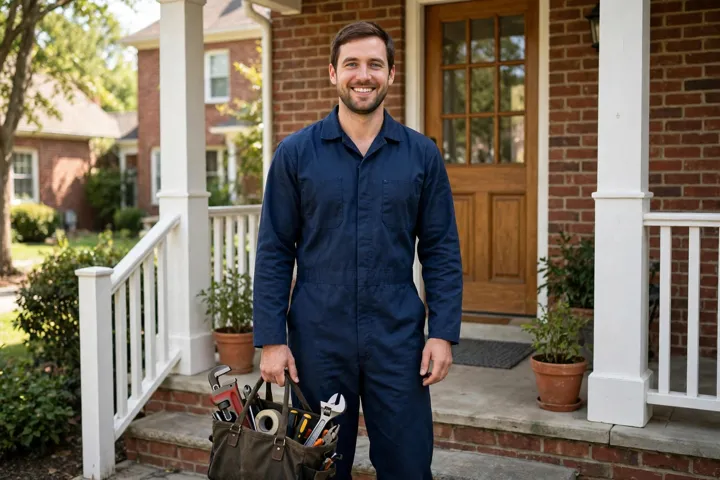
Not every backup means a sewer replacement. A blockage confined to one fixture, or to one branch of the house, is a drain problem, and it is usually solved with cleaning rather than replacement. The Woodstock home page covers drain cleaning Woodstock in depth, including how we tell a branch problem from a main line problem. If your hot water is the concern instead, see water heater installation or water heater replacement, and for on-demand hot water see tankless water heater. For Cumming homeowners, sewer and water heater work in Forsyth County is covered on our Cumming page.
Booking a sewer line replacement Woodstock assessment
Tell us what you are seeing: which fixtures back up, whether the problem returns after cleaning, and whether you have ever had a camera run before. If you have footage from a previous inspection, that is extremely useful, because it lets us compare what the pipe looked like then with what it looks like now. If a previous contractor recommended replacement, tell us what they showed you, and we will verify it with our own camera run before confirming.
You can reach us through the form on the contact page or by calling (770) 555-0100. You will get upfront pricing before work starts, camera footage you can see for yourself, and a plain explanation of the method we recommend and why, and we camera the finished work so the replacement is verified, not assumed.
Sewer questions, answered here
How long does a sewer replacement take?
It depends on the method, the length and depth of the failed section, and the access points, so no honest answer exists before the camera run and the site walk. A short, shallow section is a different job from a long, deep run under a driveway. The quote you hear accounts for the real job, not an idealized version of it.
Will trenchless work on my pipe?
It depends on what the camera shows. Lining suits a pipe that still holds its shape. Bursting suits a pipe that lining cannot save, but it needs a clear run with room for entry and exit. A collapsed pipe or a severe belly can rule lining out, since a liner takes the shape of the pipe it lines and cannot lift a low section that holds water.
Do I need to leave the house during a replacement?
Usually not. Water service may be off for stretches of the work, and the yard or driveway above the line will be disturbed according to the method, but the job is planned around the house staying occupied. We walk the dig or access line with you before work starts, and we agree the restoration plan with you in plain terms before work starts.
Related Services
One trade, five services. Every service below is water heaters and drains only.
Drain Cleaning
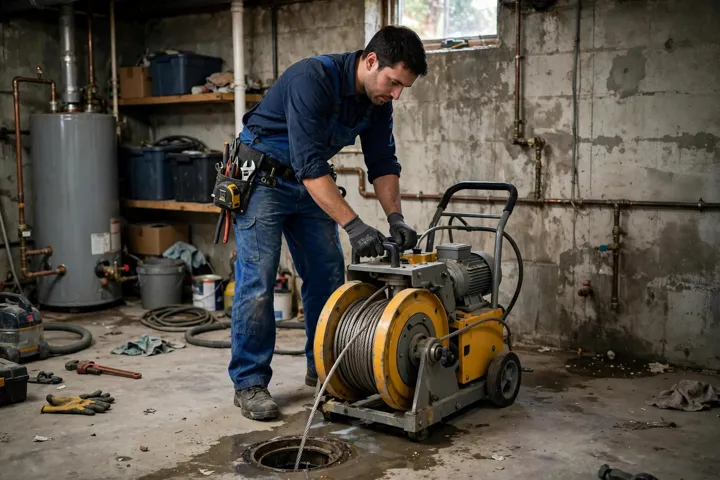
Slow sinks, tubs, toilets, and main lines cleared with professional cable equipment, and the cause found on camera when it keeps coming back.
Learn more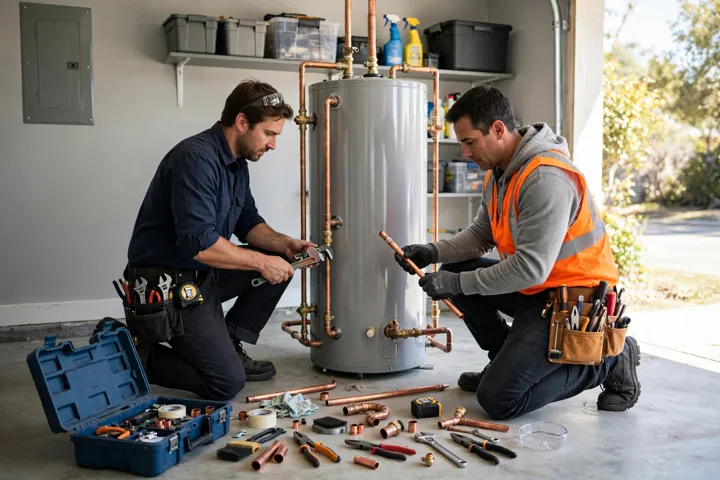
Water Heater Installation
Right-sized tank heaters installed with clean piping, safe venting, and a full test run.
Learn more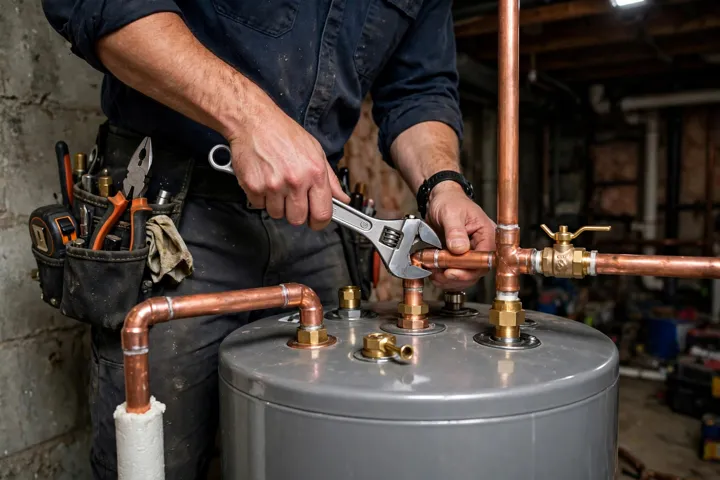
Water Heater Replacement
Failed or aging heaters swapped out, old unit hauled away, new unit proven hot.
Learn more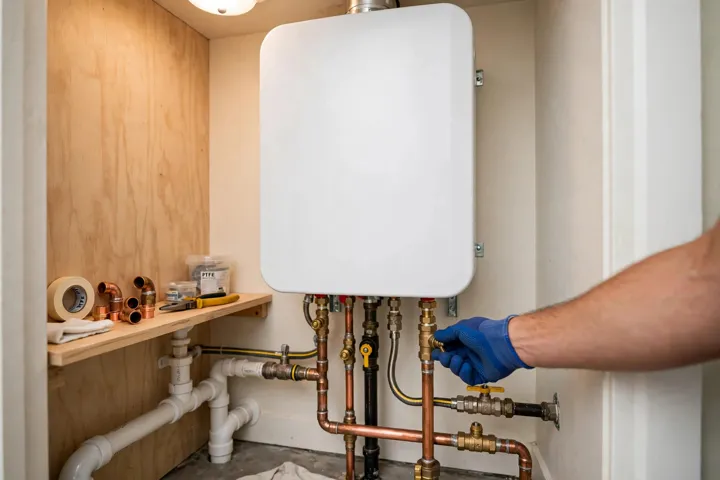
Tankless Water Heater
Endless hot water from a compact wall unit, sized to the home, its gas line, and its venting.
Learn moreKeep Reading
Related pages worth opening next, with the local detail that belongs to each one.
Woodstock
Our home base. Drain cleaning, water heaters, tankless, and sewer work across town.
Learn moreWater Heater and Drain Cost Guide
What drives the price of drain cleaning, heater installation, replacement, tankless, and sewer work, no guesswork.
Learn moreWater Heater and Drain FAQs
Straight answers to the questions Woodstock and Cumming homeowners actually ask us, in plain language.
Learn moreIndustry reference: NASSCO publishes the condition-assessment resources the drain industry uses to grade a line before recommending replacement. NASSCO.