Water Heater Installation in Woodstock, GA
A new water heater is a sizing decision first and an install second. We size it to your house, install it with clean piping and safe venting, and prove it hot before we leave.
Request Service
Tell us what is happening and we will call you back to confirm a visit.
For water heater installation Woodstock homeowners can book with confidence, we size the unit to the house, install it to code, and leave you with steady hot water and a clear explanation of the warranty. We install tank and tankless units across Woodstock in Cherokee County, and we aim to get a technician to you the same day you call.
Sizing comes first, and it is not a guess
At a glance
- Tank and tankless installation in Woodstock homes
- Sizing based on real household use, not square footage alone
- Gas and electric units, with venting and gas-line work checked on site
- Upfront pricing before work starts, and warranty terms explained in plain terms
On a water heater installation Woodstock job, a water heater that is too small will run out during a morning rush. A unit that is far too large will cost more to buy and more to run, and it will still not fix a house where the real problem is a failing mixing valve or a long pipe run to a distant bathroom. Sizing starts with how the house actually uses hot water. How many bathrooms run at once on a busy morning? Is there a large soaking tub? Does the laundry run while showers are going? Does anyone work from home and shower midday? Those answers matter more than the square footage of the house, and they are the first questions we ask.
For a tank unit, sizing is about storage plus recovery. A tank holds a set volume, and the burner or elements reheat it at a set rate. A household that showers one person at a time can live happily with a smaller tank than a household where two showers, a dishwasher, and a washer all draw at once. We walk through that pattern with you before recommending a size, and we explain the trade-off in plain terms: a larger tank costs more upfront and holds more ready hot water, while a smaller tank recovers faster relative to its size but runs out sooner under a heavy simultaneous draw.
For a tankless unit, sizing is about flow rate at your incoming water temperature. That pattern-based approach, rather than a copied size from the old label, is how water heater installation Woodstock sizing should work. A tankless heater does not store hot water, it heats it as it passes through, so the question is how many fixtures it can feed at once in winter, when incoming water is at its coldest. That is a different calculation from tank sizing, and it is where a careless install goes wrong. A unit that handles summer fine and falters in a cold snap was sized for the wrong season. We size for winter conditions, and if a single unit cannot honestly cover the house, we say so and talk through the options rather than installing a unit that will disappoint you in January. The tankless details live on our tankless water heater page.
Gas or electric, and what each one demands from the house
The fuel choice is often decided by what the house already has, but it is worth understanding what each option asks of the installation. A gas unit needs a gas supply sized for the burner, a vent path that carries combustion gases safely outside, and clearances that the manufacturer and the code require. A gas-line run that was fine for a smaller tank may not be enough for a larger tank or a tankless unit with a much higher burner input, and that is something we check before installation day, not during it. Undersized gas piping starves the burner, and the symptom is a unit that never quite reaches temperature under load.
An electric unit needs the right circuit and breaker capacity, and a tank that matches the electrical service already in the home. Electric units are simpler to vent, since there are no combustion gases, but they recover more slowly than a comparable gas tank, which changes the sizing conversation. A household that leans hard on simultaneous hot water use will feel that slower recovery, and we factor it in rather than pretending every unit behaves the same.
Venting deserves its own attention because it is where shortcuts cause real harm. A gas tank vents through a flue that must rise properly and terminate safely. A tankless unit often vents through a dedicated pipe that must be routed and sealed to the manufacturer's instructions. We do not reuse a vent path that does not meet the new unit's requirements, even when reusing it would save time. If the venting needs to change, we explain why before we start, and the change is part of the upfront price, not a surprise added at the end.
Expansion tanks come up on many installs, and they are worth understanding. When water heats, it expands, and in a closed plumbing system that extra volume has nowhere to go. An expansion tank gives it somewhere to go and takes pressure spikes out of the system. Not every home needs one, and whether yours does depends on your system setup, which we check on site. If you need one, we will tell you why in plain terms. If you do not, we will not sell you one.
Water heater installation Woodstock: what installation day actually looks like
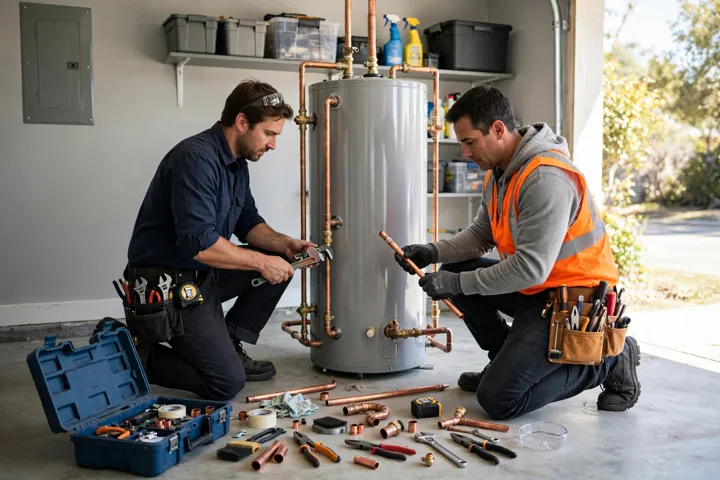
A straightforward tank installation follows a rhythm that we will walk you through before we start. Water and power or gas are isolated. The old unit is drained and disconnected. The new unit is set in place, connected, and filled. Then comes the part that matters most and gets the least attention: testing. We check for leaks at every joint, confirm the burner or elements fire and cycle properly, verify the temperature setting, and run hot water at a fixture to confirm steady delivery. We also check the pressure relief valve path, because that valve is the unit's safety release and its discharge route must be correct.
Disposal of the old unit is part of the job. An old tank full of sediment is heavy and awkward, and leaving it in a garage or on a driveway is not a finished job. We remove it as part of the installation, and we will confirm that before we start so there is no confusion about who handles it.
Hard water is a Woodstock reality, and it affects installation choices in a practical way. Scale builds inside a tank over time, settles as sediment, and makes the unit work harder and noisier. On installation day we talk about maintenance that actually helps: flushing sediment on a schedule, and checking the anode rod, which is the sacrificial part inside the tank that protects the steel from corrosion. An anode rod that has been eaten away leaves the tank unprotected, and replacing it is far cheaper than replacing a tank. We show you where these parts are and what to watch for, so the new unit lasts as long as it should.
Freeze snaps are the other Georgia condition worth planning for. A tank in a garage or an unconditioned space needs protection from freezing, and the pipe runs to and from it need attention too. We check insulation on exposed runs during installation and flag anything that looks vulnerable before the next cold snap finds it.
Warranties: what to check before you book
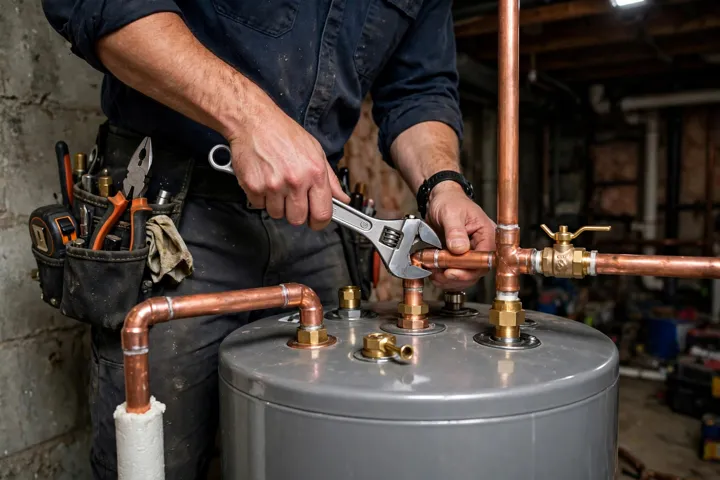
Tanks commonly carry 6 or 12 year manufacturer warranties as product options, and the difference between those options is worth understanding before you choose. A longer warranty option usually reflects a different internal build, often a larger or upgraded anode setup, rather than just a longer piece of paper. Ask what the warranty covers: the tank itself, parts, or labor as well. Those are different things, and a warranty that covers the tank but not the labor to swap it is a different value from one that covers both.
Keep the paperwork. The model and serial number, the installation date, and the warranty terms are what any future claim will ask for, and they are easy to lose in a move or a garage cleanout. We leave you with those details recorded, and we explain what would void the coverage, such as a modified vent or an unapproved part, so you do not accidentally lose protection you paid for.
Pricing on an installation is driven by factors, not by a single number, and the full breakdown lives on our cost guide. The short version: tank size, gas or electric, venting changes, gas-line work, permits where required, disposal, and access to the installation spot all move the price. A unit tucked into a tight closet with a long vent run is a different job from a unit sitting in an open garage with a straight vent path, and any honest quote reflects that.
When installation is the wrong answer
Sometimes the right call is not a new unit at all. A tank that is only a few seasons old and has a failed element or a faulty thermostat is a repair job, not a replacement job, and we will say so. A household that runs out of hot water because of a single failed dip tube does not need a new tank. On the other hand, a tank that is leaking from the tank body itself cannot be repaired in any lasting way, and no element swap will fix it. A tank that rumbles loudly from heavy sediment, or that delivers rusty water, is telling you its internal condition has deteriorated past the point where a part swap helps.
If your situation is a failing older tank rather than a first-time install, the companion page on water heater replacement covers the swap process in detail, including what we check before deciding the old unit is truly done. If your drain or sewer line is the actual problem, start with the Woodstock home page for drain cleaning Woodstock, or the sewer line replacement page where the pipe itself has failed. We keep our scope to water heaters, drains, and sewer lines, so the crew that installs your unit does this work every day and nothing else is competing for their attention.
For Cumming homeowners, water heater installation in Forsyth County is covered in depth on our Cumming page. For the questions we hear most often, see the FAQs.
Booking an installation in Woodstock
Tell us what you have now, what fuel it uses, where it sits, and what problem made you start looking. If the old unit has a label photo, that helps more than any description, because the model and capacity are right there on it. Tell us about the morning rush too: who showers when, and what else runs at the same time. That is the information that lets us size correctly the first time.
You can reach us through the form on the contact page or by calling (770) 555-0100. Upfront pricing comes before work starts, the size follows your household's real use, and the warranty terms are explained before you choose, with the work area left clean, the old unit removed, and the new unit proven hot at a tap before we leave.

Installation questions, answered here
Should I replace my tank with the same size?
Not automatically. The old size may itself have been the mistake, chosen from the old label or from square footage rather than from use. We size from the busiest morning in the house: who showers when, what else runs at the same time, and whether a large tub changes the answer.
Do I need a permit for a water heater installation?
If your job needs a permit, it is confirmed and planned before work starts, never discovered halfway through. Where a permit applies it is part of the plan, and it is included in the upfront price rather than added later.
Tank or tankless for a large family?
It comes down to simultaneous demand and winter flow. A household that runs multiple showers plus laundry plus a dishwasher at once needs a tank sized for that peak, or a tankless unit sized for winter incoming water and that same peak. Our tankless water heater page covers the tankless side of that decision.
Find Your Tank Size
Answer two questions and see the tank size range that usually fits. No phone call needed to start, and no prices here: the crew prices your exact job before work starts.
Related Services
One trade, five services. Every service below is water heaters and drains only.
Drain Cleaning
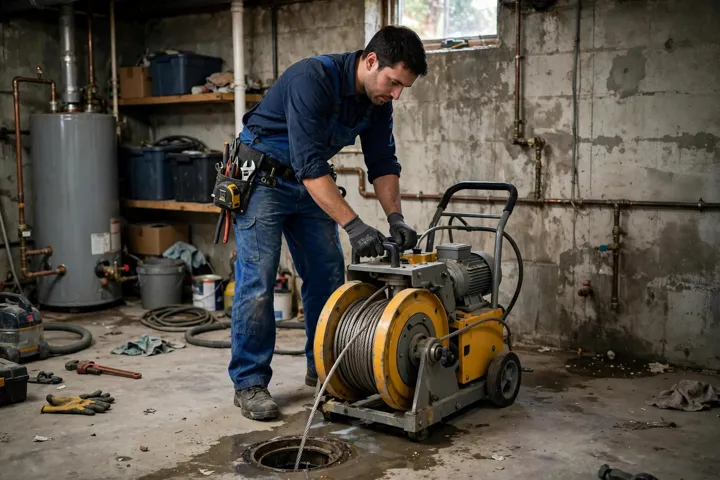
Slow sinks, tubs, toilets, and main lines cleared with professional cable equipment, and the cause found on camera when it keeps coming back.
Learn moreWater Heater Replacement
Failed or aging heaters swapped out, old unit hauled away, new unit proven hot.
Learn more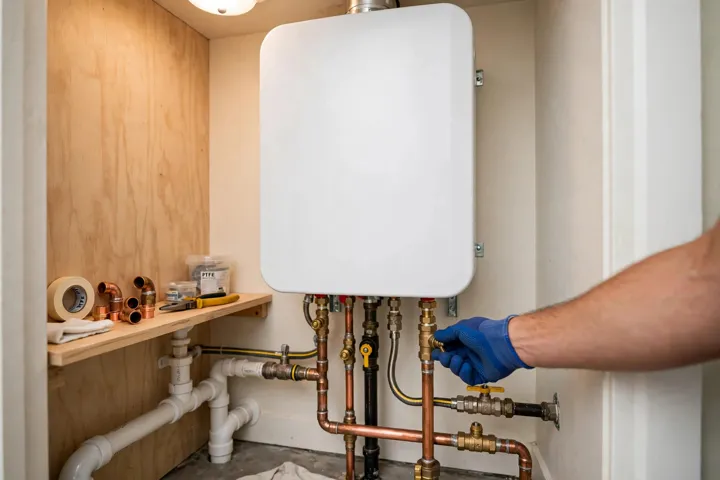
Tankless Water Heater
Endless hot water from a compact wall unit, sized to the home, its gas line, and its venting.
Learn more
Sewer Line Replacement
Broken or root-damaged sewer lines replaced, with a camera check to prove the fix.
Learn moreKeep Reading
Related pages worth opening next, with the local detail that belongs to each one.

Woodstock
Our home base. Drain cleaning, water heaters, tankless, and sewer work across town.
Learn moreWater Heater and Drain Cost Guide
What drives the price of drain cleaning, heater installation, replacement, tankless, and sewer work, no guesswork.
Learn moreWater Heater and Drain FAQs
Straight answers to the questions Woodstock and Cumming homeowners actually ask us, in plain language.
Learn moreReference: the U.S. Department of Energy publishes water heating guidance covering tank sizing, efficiency, and heater types. U.S. DOE on water heating.