Tankless Water Heater in Woodstock, GA
Tankless means endless hot water from a wall unit, but only when the gas line, venting, and sizing are right. We check all three before we quote anything.
Request Service
Tell us what is happening and we will call you back to confirm a visit.
For tankless Woodstock homeowners considering the switch, a wall mounted tankless unit heats water only when you need it, so you get steady hot water without a tank holding it ready all day. Whether it fits your house depends on gas supply, venting, and winter flow demand, and we check all three on site before recommending one. We serve Woodstock in Cherokee County, and we aim to get a technician to you the same day you call.
How a tankless unit actually works
At a glance
- Wall mounted tankless units for Woodstock homes
- Sized for winter incoming water temperature and simultaneous use
- Gas supply and venting checked on site before any recommendation
- Upfront pricing before work starts, with warranty terms explained
A tankless Woodstock install starts from one fact: the unit has no stored hot water. When you open a hot tap, water flows through a heat exchanger, a burner or electric elements fire, and the water leaves at the set temperature. When you close the tap, the unit shuts down. That on-demand design is the whole appeal: no tank of water being kept hot around the clock, no running out because a tank emptied, and a compact wall mounted box instead of a large cylinder taking up floor space.
The trade-off is flow. A tank gives you its stored volume all at once, even if that volume then runs out. A tankless unit gives you a continuous flow, but only up to its rated rate at the incoming water temperature. In summer, when incoming water is warm, that rate goes a long way. In winter, when incoming water is at its coldest, the same unit must work harder to lift the temperature, and the flow it can sustain drops. A unit sized for summer conditions will disappoint in January. We size for winter, and we size for simultaneous use: showers, laundry, and dishwasher together, not one fixture at a time in isolation.
That is also why a tankless conversation starts with questions about the house, not with a product brochure. How many showers run at once on a busy morning? Is there a large tub that fills fast? Does the laundry run while people shower? A household with modest simultaneous demand is a natural tankless fit. A household with heavy simultaneous demand may need a larger unit, a different configuration, or an honest conversation about whether a tank serves them better. We would rather have that conversation before installation than after a disappointing first winter.
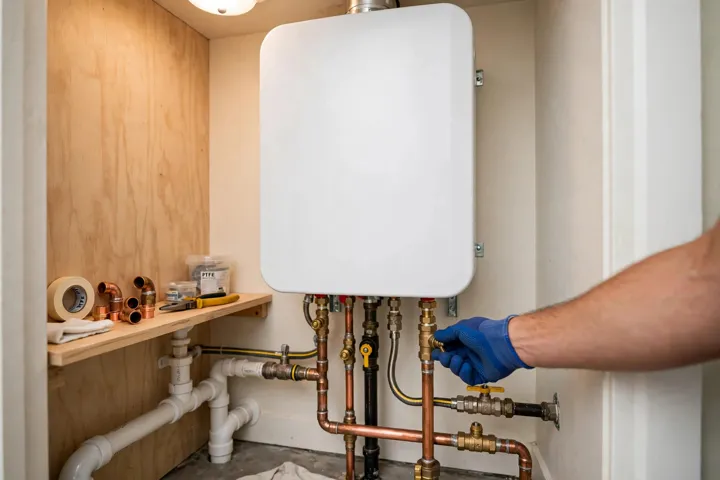
Gas supply and venting: the two checks that decide everything
A tankless burner draws far more gas at full fire than a standard tank burner. That single fact decides many tankless jobs. The gas line serving the old tank may have been perfectly adequate for that tank and entirely inadequate for a tankless unit. An undersized gas line starves the burner, and the symptom is a unit that cannot hold temperature when demand rises. We measure and check the gas-line sizing before installation day, and if the line needs upsizing, that work is part of the upfront price and the plan, not a discovery halfway through the install.
Venting is the second deciding check. Tankless units vent differently from tanks, and the vent path must match the manufacturer's requirements for that model: the right material, the right routing, the right termination. Some units vent through a dedicated pipe to an outside wall. Others have different requirements depending on whether they are condensing or non-condensing designs. We do not reuse a tank vent path for a tankless unit unless it genuinely meets the new unit's requirements. If the venting needs a new route, we explain the route, the reason, and the cost before work starts.
Condensing and non-condensing designs deserve a plain explanation. A condensing unit captures extra heat from exhaust gases, which makes it more efficient but also produces condensate that must be drained safely. A non-condensing unit is simpler in that regard but less efficient. Which one fits depends on the venting path available, the drain options near the unit, and the household's priorities. We explain both in those practical terms rather than in efficiency jargon, because the right choice is the one that fits your house, not the one with the most impressive label.
Electric tankless units exist too, and they come with their own demands: substantial electrical capacity that many homes do not already have. We check the electrical service before recommending an electric tankless unit, because a unit that needs a service upgrade is a different project from a straightforward swap, and you deserve to know that before committing.
Brands, parts, and what to ask about
Tankless units from established manufacturers such as Navien and Rinnai dominate this market for good reason: parts availability, service documentation, and installer familiarity all matter when a unit needs attention years later. A unit from a manufacturer with thin local parts support can turn a simple future repair into a long wait. We favor units where parts and support are genuinely available, and we tell you which manufacturer and model we are installing, with the warranty terms, before work starts.
Scale is the maintenance issue that matters most for tankless units in this area. We favor units with parts and support genuinely available locally, because a unit that cannot be serviced nearby is a poor long-term choice. Hard water leaves scale inside the heat exchanger, and a scaled exchanger heats less efficiently and can eventually trigger fault codes or reduced flow. Tankless units need periodic descaling, and the interval depends on your water hardness and usage. We show you the service valves and explain the descaling process during installation, so maintenance is a known routine rather than a surprise repair later.
Freeze protection is built into many tankless units, but it has limits, and a unit mounted in an unconditioned space or on an outside wall needs those limits understood. We check the mounting location, the insulation on nearby pipe runs, and the freeze protection features of the unit itself, and we flag anything that looks vulnerable before the next cold snap tests it.
Tank or tankless: an honest comparison
A tankless unit wins on endless hot water and on space. It wins on standby losses, since no tank is kept hot all day. It often wins on lifespan when maintained, because there is no tank to corrode from the inside. Those are real advantages, and for many Woodstock households they are decisive.
A tank wins on simplicity and on upfront cost. A tank install is usually a more straightforward job, with fewer gas and venting changes, and the unit itself costs less. A tank also delivers its stored volume without any flow calculation, which suits households with very heavy simultaneous demand that would need a large or paired tankless setup to match. If your household regularly runs multiple showers plus laundry plus a dishwasher at once, a tank may serve you better, or a tankless setup may need to be larger than you expected. We work through that math with you rather than assuming the tankless answer.
The comparison also depends on the house itself. A home with a gas supply and venting path that already suit tankless is a different project from a home where both need major work. That is why we check on site before quoting a firm price. The pricing factors for tankless work, including gas-line work, venting changes, and condensate handling, are covered on our cost guide.
If a tank is the better fit after all, our water heater installation page covers tank sizing and installation in depth, and our water heater replacement page covers retiring an old tank. If your concern is a drain or a sewer line, start with the Woodstock home page for drain cleaning Woodstock, or the sewer line replacement page.
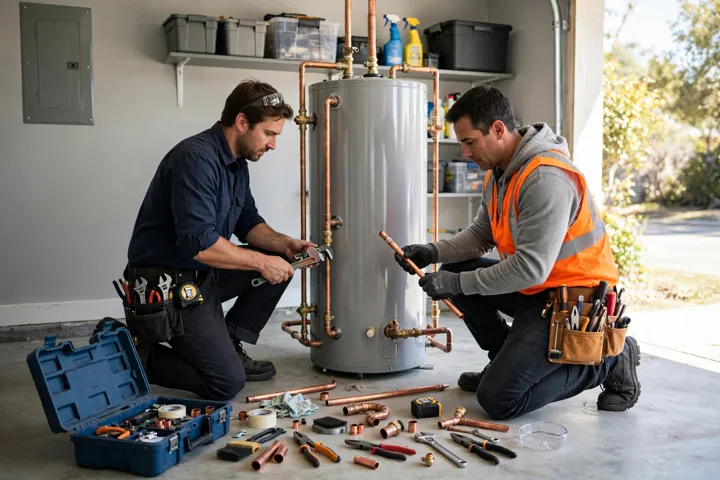
Where the unit goes in the house
Placement changes a tankless job more than most homeowners expect, and it is worth deciding deliberately rather than accepting wherever the old tank happened to sit. A tankless unit is wall mounted and compact, so it can go where a tank never could, but it still needs clearances for service, a vent route that meets the manufacturer's requirements, a gas or electric supply that can reach it without a long and costly run, and, for a condensing unit, a condensate drain route. A spot that looks tidy but blocks service access will cost you on every future visit, because the technician has to work around the placement on each call.
Garage walls are a common choice, and they work well when the vent can terminate safely and the unit is protected from freezing. An outside wall mount shortens the vent run but exposes the unit and its pipework to cold snaps, so insulation and the unit's own freeze protection features need a careful look. A utility closet can work if the clearances and venting allow it, but a closet that was built around a tank may need changes before a tankless unit fits and vents correctly. We walk the options with you on site, including the trade-off between a short vent run and a protected location, and we explain why the spot we recommend beats the alternatives for your house specifically.
Distance to the fixtures matters too. A unit mounted far from the bathrooms it serves means a longer wait for hot water and more cooled water sitting in the line between uses. That is not a reason to reject a good location outright, but it is a reason to talk about it honestly, especially in a larger house where the primary bathroom sits at the far end from the utility space. Sometimes the best answer is a different mounting spot. Sometimes it is accepting the wait in exchange for a vent route that is safe and serviceable. Either way, the decision should be made with the trade-off stated plainly before installation, not discovered at the first shower afterward.

Booking a tankless Woodstock assessment
Start with demand and supply: how your household uses hot water at its busiest, whether your gas meter and gas line have ever been upgraded, and whether you have had flow problems before. A unit that falters when a second shower starts is telling us something specific about demand and supply. A photo of the current unit's label helps too, and so does where the unit sits now.
You can reach us through the form on the contact page or by calling (770) 555-0100. You will get upfront pricing before work starts on your tankless Woodstock job, a winter-sized recommendation based on your real demand, and a clear explanation of gas, venting, and maintenance before you commit. For Cumming homeowners, tankless options in Forsyth County are covered on our Cumming page, and common questions are answered on the FAQs page.
Tankless questions, answered here
Do tankless units work in winter?
Yes, when sized for winter. Incoming water is at its coldest in winter, so the flow a unit can sustain drops compared with summer. A unit chosen on summer numbers alone will fall short on a cold January morning. We size for winter incoming water and for simultaneous use, and if a single unit cannot honestly cover the house, we say so before installation.
Does a tankless unit need a bigger gas line?
Often, yes. A tankless burner at full fire needs far more gas than the burner in a standard tank, so the line that served the old tank may not serve the new unit. We measure and check gas-line sizing before installation day, and any upsizing is quoted upfront as part of the plan.
How often does a tankless unit need descaling?
The interval depends on your water hardness and usage, so there is no single schedule to quote without knowing both. Scale from hard water builds up inside the heat exchanger. A scaled exchanger heats less efficiently, and over time it can trigger fault codes or reduced flow. During installation we point out the service valves and walk through descaling, so maintenance becomes a known routine.
Related Services
One trade, five services. Every service below is water heaters and drains only.
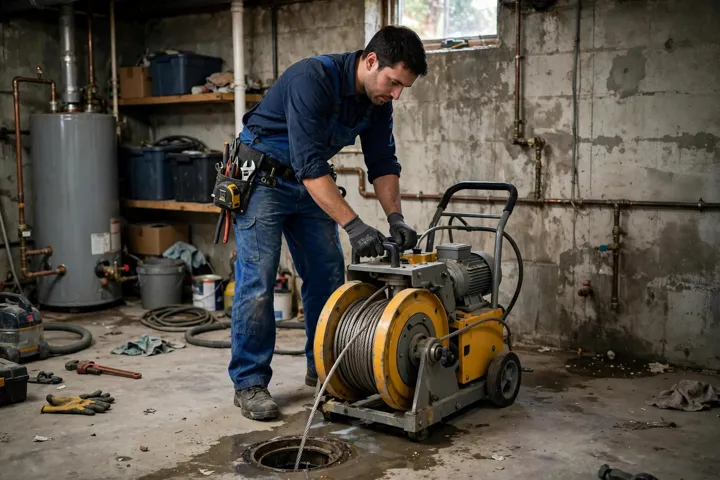
Drain Cleaning
Slow sinks, tubs, toilets, and main lines cleared with professional cable equipment, and the cause found on camera when it keeps coming back.
Learn moreWater Heater Installation
Right-sized tank heaters installed with clean piping, safe venting, and a full test run.
Learn more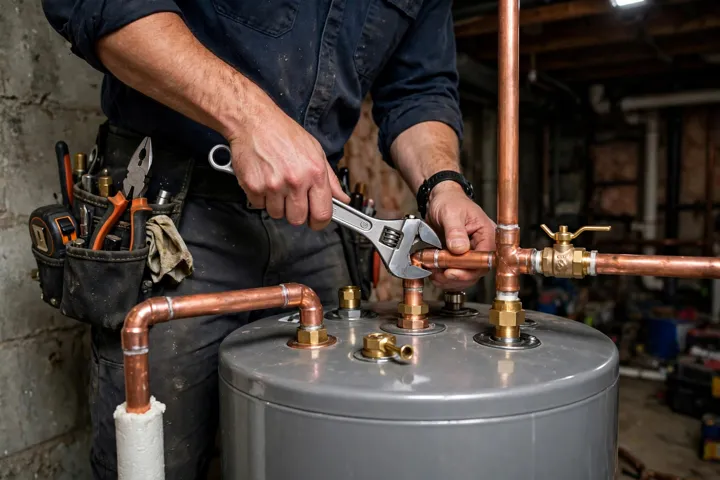
Water Heater Replacement
Failed or aging heaters swapped out, old unit hauled away, new unit proven hot.
Learn more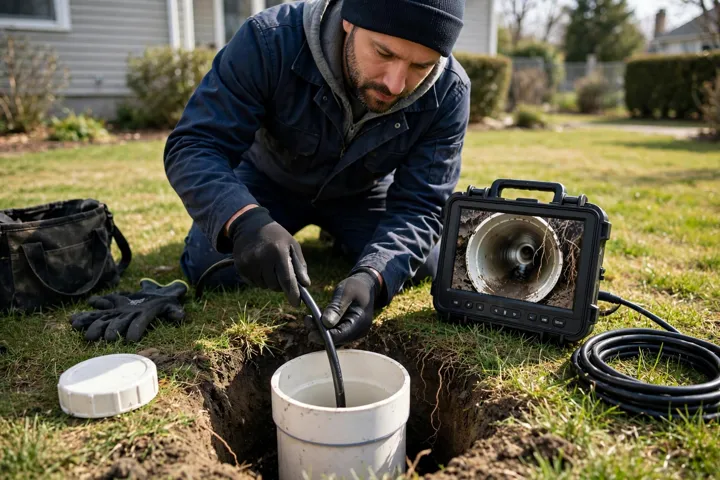
Sewer Line Replacement
Broken or root-damaged sewer lines replaced, with a camera check to prove the fix.
Learn moreKeep Reading
Related pages worth opening next, with the local detail that belongs to each one.
Woodstock
Our home base. Drain cleaning, water heaters, tankless, and sewer work across town.
Learn moreWater Heater and Drain Cost Guide
What drives the price of drain cleaning, heater installation, replacement, tankless, and sewer work, no guesswork.
Learn moreWater Heater and Drain FAQs
Straight answers to the questions Woodstock and Cumming homeowners actually ask us, in plain language.
Learn moreReference: the U.S. Department of Energy publishes water heating guidance covering tankless and demand-type heaters alongside tank models. U.S. DOE on water heating.